
Why Every Modular Vendor Needs a Service Hub, Spares Warehouse, Training Center, and Community Outreach
Executive summary
Modular construction shines when it’s reliable, repeatable, and fast. But those advantages don’t realize themselves on a project site—they’re enabled by a local ecosystem: a service center with technicians and spares, a parts warehouse, a hands-on training facility for erectors, ongoing information sessions for local architects/engineers (A/E), case-study briefings for authorities having jurisdiction (AHJs), and clear financial analysis for investors and public funders. Standing up this “last-mile” infrastructure reduces risk, shortens schedules, streamlines approvals, and converts one-off pilots into scalable programs.
1) Local service centers: uptime is everything
A modular vendor’s reputation lives or dies on response time. When a building is assembled like a precision product, the fastest way to protect it is to have factory-trained techs nearby.
What a service center does
- Warranty & emergency calls: 24–72-hour on-site response windows with SLAs measured in hours, not weeks.
- Commissioning & seasonal tune-ups: Balancing ERV/HRV systems, verifying controls updates, and completing thermal/airtightness checks post-occupancy.
- Failure forensics: Root-cause analysis on transport or installation defects; standardized corrective actions fed back into production.
- Owner training: On-site operations orientation and digital O&M refreshers.
KPIs to track
- Mean Time to Respond (MTR) and Mean Time to Repair (MTTR)
- First-visit fix rate (% service calls closed without return visit)
- Warranty cost per module per year
- Owner satisfaction (CSAT/NPS) 30 and 365 days after handover
Payoff
- Faster closeout and fewer holdbacks
- Lower lifetime cost of warranty (spares on hand + trained techs)
- Stronger references for the next project in the region
2) Parts storage warehouses: small components, huge risk reduction
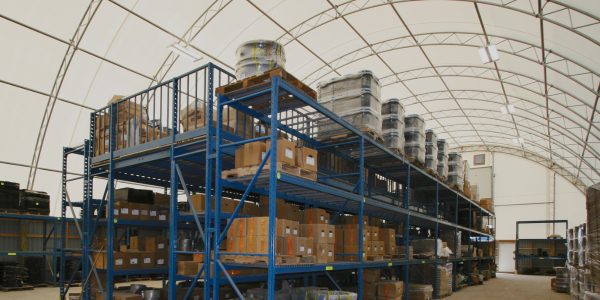
A $50 gasket can delay a $50M opening if it’s not on the shelf. Local spares flip the script.
What to stock (80/20 rule)
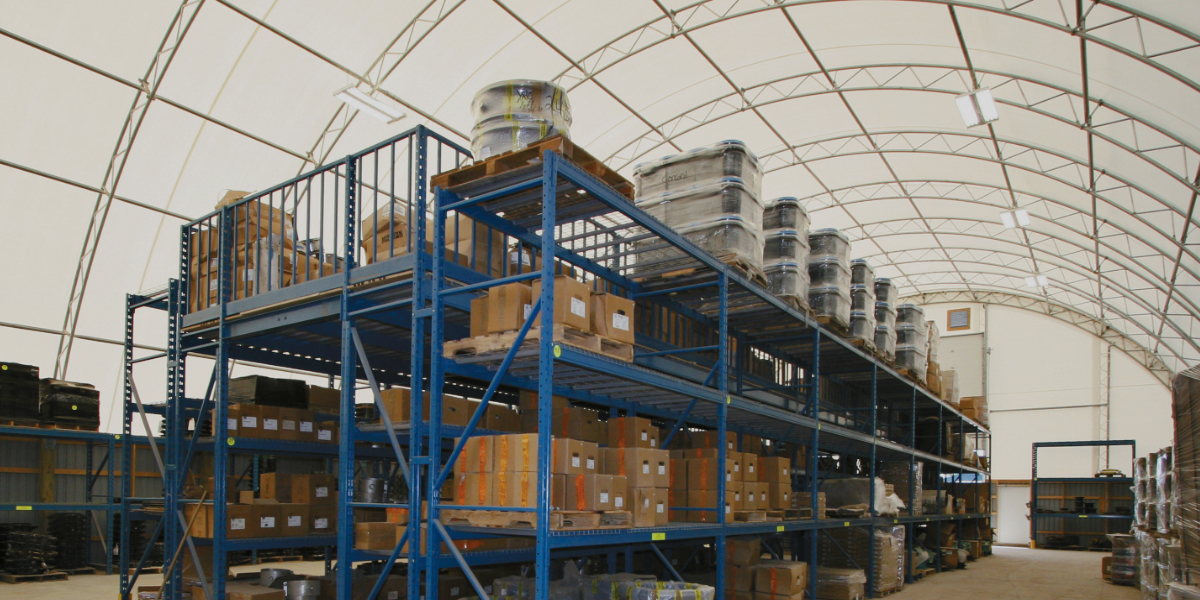
- Critical path items: façade gaskets, module-to-module seals, firestop kits, lifting/stacking connectors, window hardware, door sets.
- MEP essentials: ERV/HRV filters and motors, control boards, valves, PEX fittings, sprinkler heads/couplings, electrical breakers/receptacles.
- Envelope repair kits: Membranes, tapes, insulation boards, fasteners, sealants approved in your listed assemblies.
- Transport & rigging: Shackles, slings, spreader-bar hardware, pick-point hardware, shim kits.
Inventory strategy
- ABC classification (A = mission-critical, tight cycle counting; C = long-tail)
- Min-max levels based on install cadence (modules/week) and lead times
- Lot traceability tied to module IDs for quality and warranty tracking
Payoff
- Same-day fixes for punch-list items
- Reduced site downtime and crane standby costs
- Lower freight premiums and fewer “expedites”
3) Training facilities: turning local erectors into repeat performers
Modular is manufacturing plus assembly. Your best risk control is hands-on repetition before steel meets crane.
What great training looks like
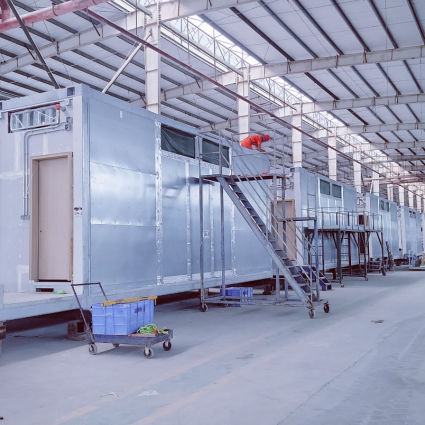
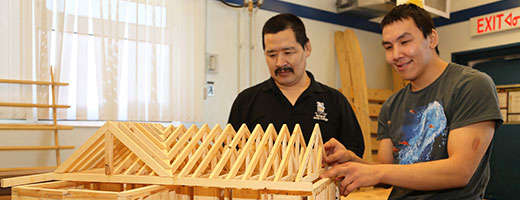
- Mock-up yard: Permanent foundations with anchor systems to practice picks, setting, stitching, and tolerance management.
- Live stations: Firestopping at seams (listed systems), membrane tie-ins, balcony/railing interfaces, MEP plug-and-play connections.
- Lift rehearsals: Spreader-bar setup, tag-line choreography, wind thresholds, radio protocols.
- QA culture: Teach checklists, hold points, and photo documentation; align with your factory QA language.
Credentials & cadence

- Issue site installer cards (renew every 2–3 years) tied to specific product lines
- Run bootcamps before each local program ramps (e.g., 2–3 days per cohort)
- Capture metrics: modules set/day, rework per module, safety incidents, inspection pass rate
Payoff
- Predictable productivity (takt) during setting
- Fewer deficiencies and faster substantial completion
- Safer sites and lower insurance friction

4) Information sessions for local architects & engineers: accelerate design alignment
A/E firms are your multipliers. When they understand your module families, design goes from bespoke to configured.
What to cover
- Module catalog & constraints: Structural grids, stack strategies, shear cores, MEP chase rules, façade attachment limits.
- Performance targets: Airtightness goals, acoustic/STC, fire-rating assemblies, energy compliance pathways.
- Interface details: Foundations, stairs/elevators, roofs/parapets, balconies, podium transfers.
Format
- Quarterly lunch-and-learns + open QA sessions
- Share BIM families (Revit/IFC), typical details, and sample specs
- Offer co-design sprints on pilot projects to right-size the learning curve
Payoff
- Fewer RFIs and change orders
- Faster permit drawings and coordinated shop drawings
- Designers who advocate for modular in future RFPs
5) Case-study briefings for AHJs: earn recognition, not exceptions
Authorities want safe, compliant buildings and consistent inspections. Give them evidence, process, and transparency.
What AHJs want to see
- Comparable outcomes: Fire-resistance ratings, egress, structural safety, energy compliance—same or better than conventional.
- Factory governance: Certification (e.g., A277 or equivalent), welding qualifications, QA documentation, traceability.
- Inspection roadmap: In-factory inspections, third-party labeling, and what will be inspected on site (connections, firestopping, life-safety tests).
- Local precedents: Photos, inspection reports, and performance data from projects in similar climates and occupancies.
How to deliver it
- Host AHJ open house at the training yard with a full-scale module; walk inspectors through hidden assemblies and listed systems.
- Provide a compliance matrix mapping each code requirement to your standard details and test reports.
- Share a permit/inspection checklist that mirrors their workflow.
Payoff
- Shorter review cycles, fewer surprises at inspection, and—over time—formal recognition of your modular process
6) Financial analysis for investors & public funders: de-risked delivery with measurable outcomes
Capital partners care about risk, predictability, and yield. Show how local infrastructure lowers variance and advances policy goals (speed, affordability, Indigenous or remote housing, decarbonization).
What to quantify
- Schedule compression: Parallel factory/site work; show months saved and interest carry avoided.
- Contingency draw: Compare historical contingency burn on modular with vs. without local hub (parts + service + trained crews).
- Warranty & OPEX: Track first-year service calls/unit, mean time to repair, and energy intensity (kWh/m²·yr) where balanced ERV/HRV and airtight envelopes are standard.
- Throughput: Modules/week capacity with local staging; crane days vs. unit count.
- Community benefits: Local hiring, training credentials issued, subcontractor spend—key in public funding.
Simple pro-forma levers
- Capex delta: Factory premium vs. cost reductions (shorter site prelims, reduced weather risk, less rework, fewer hotel days for traveling trades).
- Schedule value: (Monthly revenue or avoided temporary housing costs) × (months pulled left).
- Opex savings: Energy + maintenance reductions (warranty, mould/rot remediation avoided).
- Residual risk: Sensitivity on transport/weather disruptions with local spares/training vs. without.
Artifacts to include
- One-page risk register with mitigations delivered by the hub
- S-curve comparing conventional vs. modular cash flow and revenue ramp
- Case study with P50/P90 dates (planned vs. actual) showing predictability gains
7) Putting it together: a modular vendor’s “Local Readiness Plan”
Phase 0 — Market selection (4–8 weeks)
- Opportunity sizing (annual unit demand, public programs, climate/transport constraints)
- Facility siting near highway/port/rail; zoning and lease terms
- Shortlist local erectors and service firms
Phase 1 — Stand-up (8–16 weeks)
- Lease/fit-out: 10,000–30,000 ft² mixed use (training bay, classroom, parts warehouse, service shop)
- Staff: hub manager, field service lead, warehouse lead, HSE/QA coordinator, trainer
- Stock: initial spares aligned to first two projects’ BOMs (min-max set)
- Build two mock-ups: one structure/rigging and one envelope/MEP seam module
- Launch A/E & AHJ outreach calendar
Phase 2 — Operate and iterate
- Quarterly KPIs and after-action reviews (AARs) tied to schedule, quality, safety, and cost
- Expand catalog of standard details and local approved substitutions
- Grow local vendor list (coaters, gasket suppliers, rigging) to derisk logistics
8) Case-study outline you can reuse with stakeholders
- Context: Project type, climate, logistics, delivery model
- Local hub components used: Training cohort size, spares value, service response SLAs
- Schedule results: Planned vs. actual set rate, crane days, substantial completion date
- Quality & safety: Deficiencies per unit, rework hours, TRIR
- Financials: Contingency draw, change orders as % of contract, interest carry avoided
- Community metrics: Local jobs, certifications issued, supplier spend
- Lessons learned & next steps: What to keep, change, and scale
9) Common objections—and how the hub answers them
- “It’s expensive to set up.” True—but the payback arrives via reduced delays, fewer claims, lower freight, and faster revenue. Start with a right-sized hub and scale with demand.
- “Our factory is far away.” Exactly why you need local spares, trained crews, and service SLAs—distance adds variance.
- “AHJs slow us down.” Bring them inside the tent: mock-ups, listed assemblies, transparent inspection plans. Predictability builds trust.
- “Local crews aren’t modular-ready.” Train them. Your QA language becomes their daily practice; performance follows.
10) The bottom line
Modular construction wins on time, quality, and cost—but only when vendors control the last mile. A local service center, parts warehouse, training facility, and structured outreach to A/E, AHJs, and capital partners convert theoretical advantages into bankable outcomes: faster approvals, smoother installs, lower risk, and repeatable success. Build the hub, measure what matters, and watch pilot projects become regional programs.